
Duck boat tours once stood out as one of the most unusual sights along San Francisco’s waterfront. Bright, loud, and impossible to ignore, these amphibious vehicles rolled through city streets before splashing into the bay, carrying tourists on a ride that felt part sightseeing tour, part novelty show. For a time in the 2000s, they became a familiar presence near Fisherman’s Wharf, drawing crowds with their unusual design and playful branding.
Behind the spectacle, however, the history of these vehicles carried a far heavier story. Built from World War II-era military machines, the same structures that once supported battlefield operations later became part of a tourism industry that would face repeated safety failures, fatal accidents, and lasting legal battles across the United States.
From War Machine to Tourist Attraction
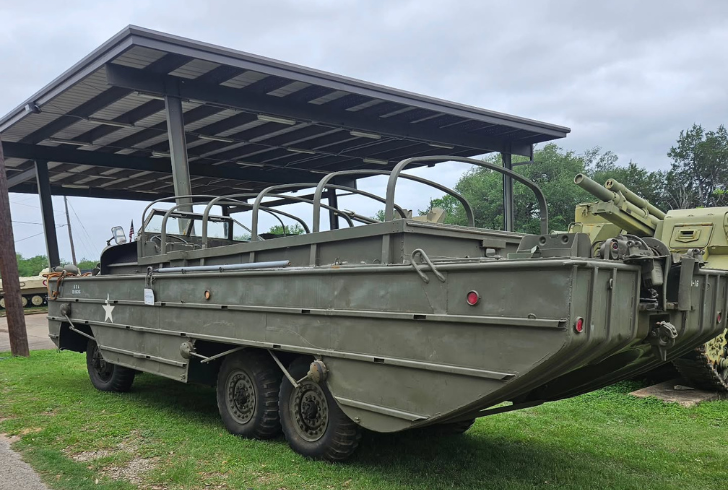
The foundation of duck boat tours traces back to the DUKW vehicle, pronounced “Duck,” developed during World War II. These amphibious vehicles were designed to transport ammunition, supplies, and soldiers across land and water. Weighing roughly 2.5 tons and capable of carrying around 25 people, they could reach speeds of up to 50 mph on roads and move across water at about 5 knots.
During the D-Day landings in Normandy, these vehicles played a key logistical role in delivering troops directly onto beaches. Despite their usefulness, the design carried risks even in wartime conditions. Reports from the era documented situations where overloaded vehicles struggled in rough waters and occasionally sank, leading to loss of life.
After the war, surplus DUKWs were sold off to private buyers. In 1946, an entrepreneur named Melvin Flath reportedly launched one of the earliest recreational uses of the vehicle after purchasing one at a military auction. He added basic seating and began offering lake tours for small fees. That idea slowly evolved into a tourism concept that spread across parts of the United States by the 1990s.
What began as a repurposed military machine eventually turned into a commercial attraction—one that combined road travel with short water excursions, offering a novelty experience that few other vehicles could match.
Duck Boats Arrive in San Francisco’s Tourist Scene
By the mid-2000s, amphibious tours became a recognizable part of San Francisco’s waterfront tourism. Near Fisherman’s Wharf, large duck boats operated by companies such as Ride the Ducks brought groups of visitors through city streets, often passing busy intersections and well-known landmarks before entering the bay.
The vehicles stood out immediately. Their bulky frames, bright paint, and cartoon-like duck branding made them impossible to miss. Tourists often added to the spectacle by using duck-themed horns or kazoos, filling the streets with loud, playful noise.
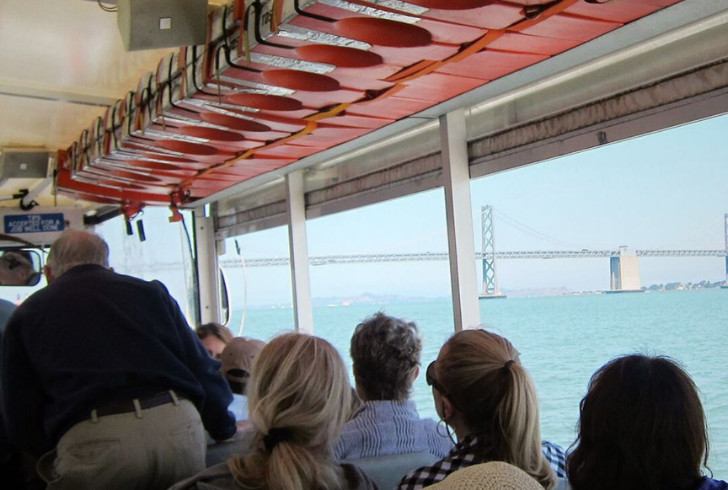
These tours typically followed a familiar route: departure from the Wharf, a drive through downtown streets, and a splash into San Francisco Bay for views of McCovey Cove and the waterfront skyline. Ticket prices hovered around $39 for roughly 80 minutes of combined land and water travel.
At the time, the experience was widely viewed as a quirky alternative to traditional cable car tours. Still, even in busy tourist seasons, the vehicles drew concern from locals who had to share narrow streets with slow-moving, heavy amphibious machines.
Rival Operators and Growing Competition
The popularity of duck boat tours in San Francisco led to competition between operators. One locally operated company, Bay Quackers, entered the market around 2005 and quickly became known for its playful branding and aggressive rivalry with Ride the Ducks.
Passengers were handed a “wacky quaker,” a duck-shaped kazoo that became part of the company’s identity. Legal disputes followed, including disagreements over branding and customer experience tactics. At one point, the rivalry became public enough to attract media coverage.
Despite the entertainment angle, these companies operated vehicles that required complex maintenance and careful oversight. Many of the amphibious trucks still relied on decades-old mechanical systems originally designed for military use.
As tourism demand increased, so did operational pressure. That combination would later become a key factor in a series of safety failures across multiple cities.
“Miss Majestic” Disaster and Early Warning Signs
One of the earliest and most devastating accidents involving a duck boat occurred in 1999 on Lake Hamilton in Arkansas. The vessel, named “Miss Majestic,” sank during a tourist excursion, killing 13 people, including three children. Only eight passengers survived.
According to investigation findings from the National Transportation Safety Board, safety procedures were poorly communicated. Life jacket access was delayed during the emergency, and the situation escalated rapidly once water began entering the vessel.
Passengers described early signs of trouble before the sinking. The boat felt unusually slow, and within minutes, water started appearing inside the cabin. A teenage passenger later noticed that the water was already high enough to reach the lower parts of the seating area. At one point, a passenger could reportedly touch the lake surface from inside the boat.
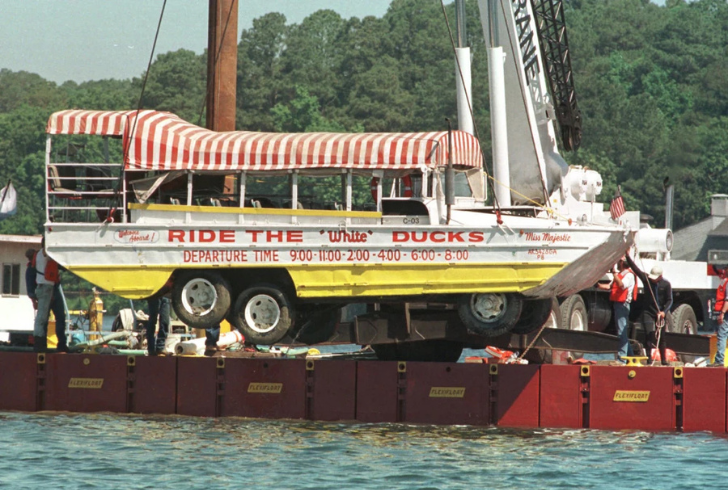
As panic set in, attempts were made to redistribute passengers for balance, but flooding continued. Survivors described the final moments as chaotic, with water rushing into the cabin and limited time to react. Reports varied on the exact timeline of the sinking, ranging from seconds to just over a minute.
One survivor managed to escape through a window moments before the vessel went under. Others were trapped beneath the canopy structure, which later became a key concern in safety evaluations.
Investigators also highlighted mechanical issues and maintenance challenges. Replacement parts were difficult to obtain, and older components were sometimes reused despite visible wear.
A passenger’s description captured the severity of the event: “It was already so low that the water was right there,” one report noted.
Continued Incidents Across the United States
The Arkansas tragedy did not halt operations elsewhere. Similar vessels continued running in multiple cities, and additional incidents followed in the early 2000s.
In 2000, a duck boat in Milwaukee experienced mechanical failure mid-tour. The operator reported hearing unusual engine noise followed by a sudden loss of power. The vessel began taking on water, but all passengers were rescued before it fully sank.
In 2001, another amphibious vehicle in Seattle had to abort a tour shortly after departure due to mechanical concerns. While passengers safely exited, the vessel later sank during towing operations.
Over time, technical problems became a recurring theme. Reports included steering cable failures, broken shafts, loose fittings, radiator issues, and engine malfunctions. Maintenance difficulties were often linked to the age of the vehicles and the limited availability of compatible replacement parts.
A mechanic involved in one investigation noted that some repairs required the use of surplus military components, which were not always in ideal condition.
The 2015 Seattle Crash and Structural Concerns
One of the most severe modern accidents occurred in Seattle in 2015. A Ride the Ducks vehicle collided with a motor coach carrying college students on the Aurora Bridge. Five people died, and more than 70 were injured.
Investigators later reported that the driver had heard a mechanical clanking sound before losing control of the vehicle. The crash caused multiple passengers to be thrown from the amphibious truck upon impact.
The medical examiner confirmed that the victims suffered fatal head and body trauma. Investigators also found that axle fractures were not properly repaired, contributing to the loss of control.
The incident intensified scrutiny on how these vehicles were maintained and operated in public spaces, especially given their dual use on both roads and water.
The 2018 Missouri Tragedy and National Attention
The deadliest duck boat accident in North America occurred in July 2018 near Branson, Missouri, on Table Rock Lake. Seventeen people lost their lives when a Ride the Ducks vessel sank during a severe storm.
Weather alerts had already been issued for the area, warning of dangerous conditions. Despite this, the tour proceeded with minor route adjustments. Conditions deteriorated quickly as a powerful storm system moved over the lake, producing high winds and large waves.
Within minutes, the vessel struggled to remain stable. Survivors reported that the captain attempted to return to shore but was overtaken by rapidly intensifying weather. Waves overwhelmed the boat, and it sank within minutes, resting deep below the lake’s surface.
Rescue efforts began immediately but were hindered by extreme weather. Some nearby boats attempted to assist, though conditions made recovery operations dangerous. Divers later recovered victims from significant depths in the following days.
A survivor described the moment as sudden and overwhelming, with little time to react once conditions shifted.
Legal proceedings later followed, focusing on operational decisions and weather-related judgment calls.
Legal Fallout and Industry Collapse
Following repeated accidents, legal pressure mounted across multiple states. Attorneys involved in litigation described the vehicles as fundamentally unsafe in certain conditions.
One lawyer involved in cases tied to the Branson tragedy stated, “They are death traps,” pointing to the design limitations of amphibious vehicles, especially canopy structures that can trap passengers during sinking events.
He also noted concerns about regulatory oversight, stating, “That was the horror of these drownings… they never addressed it.”
A revised National Transportation Safety Board report later recorded 37 deaths and over 100 injuries linked to DUKW-related incidents across decades.
Insurance costs rose sharply for operators, and several companies faced shutdowns or severe operational limits. One branch in Philadelphia closed after insurance premiums increased significantly. San Francisco operations ended in 2015, with local officials also introducing stricter regulations on tour narration while driving.
Authorities cited safety concerns and prior incidents involving large tour vehicles in urban traffic.
A representative of the industry later described San Francisco as a “challenging business environment,” reflecting growing regulatory and financial pressure.
Decline of Duck Boat Tours
By the late 2010s, duck boat operations in major U.S. cities had largely disappeared or scaled down. Only a limited number of vintage DUKW vehicles remained in service nationwide.
Maintenance challenges continued to play a central role in their decline. Parts scarcity, aging mechanical systems, and structural limitations made consistent safety upgrades difficult. Unlike modern vehicles, these amphibious trucks were not originally designed to meet contemporary crash safety standards.
They lacked features such as seatbelts and airbags, and their structural design did not align with modern passenger protection expectations.
Even as some operators attempted upgrades, concerns remained about whether such modifications could fully address inherent design risks.
Amphibious duck boat tours once stood as a lighthearted attraction in San Francisco and other major cities, blending street travel with waterfront views. Over time, repeated mechanical failures, weather-related disasters, and structural design issues revealed a far more serious side to the industry.
From early wartime origins to modern tourism operations, the DUKW’s legacy carries both historical significance and a record of preventable tragedies. Safety debates continue to shape how these vehicles are viewed today, leaving behind a complex chapter in American tourism history marked by innovation, risk, and loss.